
The most commonly used version is the trailing twelve months (TTM) EPS, which can be calculated by adding up earnings per share for the past four quarters. Revenue accounts are typically closed at the end of the accounting period (e.g., monthly, quarterly, or annually). This involves adding up all the revenue transactions posted to the account since the last closing date.
Current Portion of Long-Term Debt
Saxo Bank A/S and its entities within the Saxo Bank Group provide execution-only services, with all trades and investments based on self-directed decisions. Analysis, research, and educational content is for informational purposes only and should not be considered advice nor a recommendation. Saxo’s content may reflect the personal views of the author, which are subject https://mdwatch.vn/2020/11/02/19-best-salt-lake-city-ut-accountants/ to change without notice. Mentions of specific financial products are for illustrative purposes only and may serve to clarify financial literacy topics. Content classified as investment research is marketing material and does not meet legal requirements for independent research. Before making any investment decisions, you should assess your own financial situation, needs, and objectives, and consider seeking independent professional advice.
Non-Current Assets
- An unclassified balance sheet presents assets, liabilities, and equity in a simplified list without separating them into current or long-term categories.
- All of the cash flows occur at the end of each year, including capital expenditures and any financing transactions.
- In this case, even if the ROE goes up, the stock may have become a riskier investment by taking on debt.
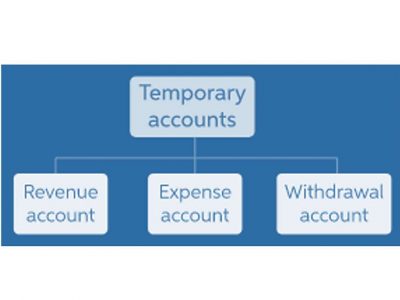
- Closing revenue accounts transfers the earned income to the retained earnings account, which represents the company’s accumulated profits.
- The first step is to determine the date on which the revenue accounts will be closed.
An unclassified balance sheet presents assets, liabilities, and equity in a simplified list without separating them into current or long-term categories. This format provides a general overview of a company’s financial position but lacks the detailed breakdown needed for in-depth financial analysis. Unclassified balance sheets are often used by smaller businesses or for internal reporting purposes where simplicity is prioritized over analytical detail.
Pro Forma Cash Flow Statement: A Comprehensive Guide
If you use it correctly, an income statement will reveal the total net income of your business by calculating the difference between your assets and liabilities. This document is essential as you learn how to calculate retained earnings and other equities. In simple terms, retained earnings represent the profits that have been reinvested in the company instead of being paid out, and they are listed on the balance sheet under shareholders’ equity. Retained earnings are the part of a company’s net income that is retained and not distributed to shareholders as dividends. Instead, these earnings are reinvested into the business or used to pay off debt.


This is a handy measure of how profitable the company is on a percentage basis, when compared to its past self or to other companies. Are you still wondering about calculating and interpreting retained earnings? If the company is experiencing a net loss on its Income Statement, then the net loss is subtracted from the existing retained earnings. Retained earnings are used for reinvestment in the business, such as through research and development, buying new equipment, paying off debts, or anything else that will help the company grow. how to calculate retained earnings Retained earnings are the accumulated amount of net income the company retains after paying dividends to its stakeholders. Below is a short video explanation to help you understand the importance of retained earnings from an accounting perspective.
Indirect Method Presentation
It’s a straightforward way to QuickBooks assess profitability, as it takes the complexities of the income statement and distills it into one simple number. EPS is a simple, efficient way to analyze a company’s growth trends as well as how it compares to its peers. EPS is a market multiple ratio, meaning it simplifies financial statements into a number that can be compared to peers. Basic EPS includes all of the company’s outstanding shares, while diluted EPS includes shares, stock options, warrants, and restricted stock units. Quarterly income statements can be accessed from the company’s 10-Q filings on either the SEC or company website, where they’re usually in the investor relations section.
- The process involves more than just adding and subtracting numbers, it requires a deep understanding of a company’s financial health and its ability to reinvest profits for growth.
- He has a proven track record of launching new products and services, forging strategic partnerships, and leading cross-functional teams.
- While the Earnings Multiples Method is simple and widely accepted, it does not consider future growth potential, asset value, or market fluctuations.
- Retained earnings for a single period can reveal trends in the company’s reinvestment, but they don’t tell you how those funds are used, or what the return on investment is.
Dividends are paid out of accumulated retained earnings, so you’ll need to subtract them from the sum of net income and beginning retained earnings to find the total for your defined period. Though you’ll find them recorded on the ‘liability’ side of your balance sheet, retained earnings are actually a key indicator of your business’s sound financial standing. You can think of them as the company’s private piggy bank — a place to store everything left over from net income after paying dividends. The final retained earnings figure is calculated by adding net income and subtracting dividends from the beginning retained earnings balance. This represents the company’s cumulative profits that are reinvested or held in the business.

How to Calculate Retained Earnings: Formula and Example
- From there, the change in net working capital is added to find cash flow from operations.
- It’s the starting point for calculating profitability, as expenses are subtracted from revenue to determine the company’s net income.
- Cash dividends represent a cash outflow and are recorded as reductions in the cash account.
- Depending on your goals, you can look at retained earnings in a few different ways to gain insight into a company’s overall financial health.
- So, the second step is to review the company’s income statement for either income or losses.
- Closing revenue accounts is a crucial step in the accounting process, and it’s essential to do it correctly to ensure accurate financial reporting.
From the question we are informed about the Sanchez Foods Inc. which is a large food manufacturing corporation that earns more profits than its competitors. It also promotes organic farming and helps nonprofit agencies that focus on food and nutrition causes. In this scenario, Sanchez Foods is most likely to have adopted the practice of green marketing. While this method is quick and straightforward, it does not account for profitability or operational efficiency, making it necessary to use alongside other valuation methods for a more accurate assessment. Additionally, stock buybacks lead to reduced shareholders’ equity, so large-scale buybacks can increase ROE by reducing the equity part of the formula.
- In the financial world, revenue accounts play a crucial role in capturing a company’s income-generating activities.
- If there are uncollectible invoices, consider creating an allowance for doubtful accounts.
- Conversely, if a current liability, like accounts payable, increases this is considered a cash inflow.
- This ending balance is found in the stockholders’ equity section of the balance sheet as of the end of the prior accounting period.
- It is the act of directing various financial resources—such as credit, loans, and invested capital—to those parts of the economy that need them most or can use them most effectively.
The P/E ratio is one of the simplest and most popular ways to value a company, especially when comparing it to industry competitors and benchmarks such as the S&P 500. In such cases, the company may be investing heavily in expenses like R&D to grow. There are several types of EPS including reported EPS, adjusted EPS, ongoing EPS, retained EPS, cash EPS, and book value EPS. Information on our international website (as selected from the globe drop-down) can be accessed worldwide and relates to Saxo Bank A/S as the parent company of the Saxo Bank Group.